
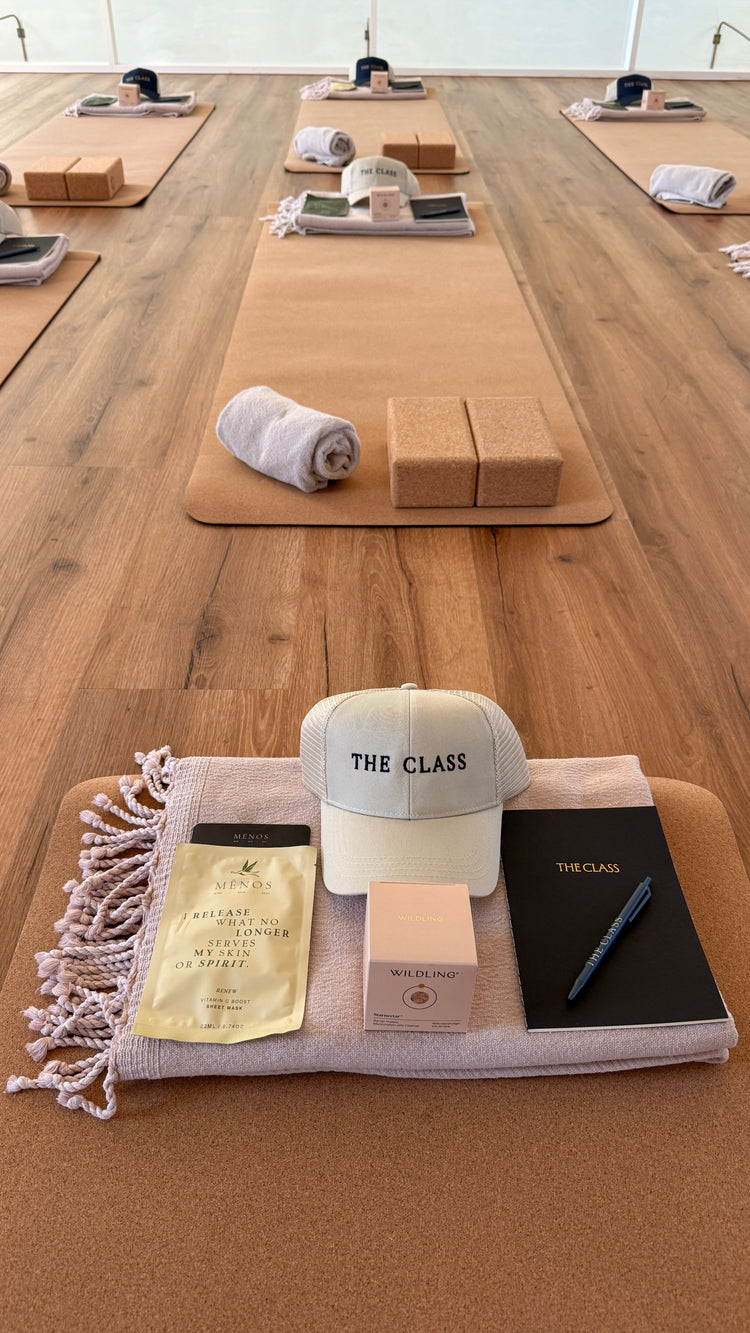
The Art of Listening to Your Body: Exploring Movement, Mindfulness & Ritual with Jaycee Gossett of The Class
The Body Knows: Movement, Ritual & Intuition with Jaycee Gossett of The Class
What if the key to feeling better wasn't doing more, but learning to listen to your body?
In this edition of Wildling's Ask the Expert, we sit down with Jaycee Gossett of The Class to explore the connection between movement, mindfulness, and intentional ritual. From supporting lymphatic flow and nervous system awareness to reconnecting with our intuition, Jaycee shares why true wellness begins from within—and how small, everyday practices can transform the way we care for ourselves.
Because sometimes, the most powerful ritual is simply slowing down and tuning in.
The Conversation
To start, tell us a little about yourself and your journey. What first drew you to movement, somatic practice, and the work you do today?
Movement has been a throughline in my life for as long as I can remember. I came to it first through dance, which was really my first language. Before I knew anything about somatics or embodiment, I knew that moving my body could change something. My mood, my energy, my perspective, how connected I felt to myself.
Over time, that curiosity expanded into yoga, meditation, somatic practices, spirituality, and different healing traditions. And I think I've spent most of my life asking some version of the same question: What is my body telling me and how can I use that as a guide, vs seeking external answers?
Because the body is constantly communicating. Sometimes loudly, sometimes in the tiniest whisper.
That's what continues to fascinate me. Movement can absolutely be physical. We can get stronger, sweat, build endurance, and challenge ourselves. But it can also be a way of listening, processing, expressing, playing, and coming home to ourselves.
1. You've explored movement through dance, yoga, and somatic practices. How has that shaped the way you understand the body today?
Each practice gave me something different.
Dance taught me expression. Yoga taught me attention. Somatic practice taught me how to listen.
And maybe most importantly, all of them taught me to experience my body as something to be in relationship with rather than something I need to fix, control, perfect, or escape from.
I think so many of us are taught to experience our bodies from the outside. How do I look? How am I performing? Am I doing this correctly?
These practices keep inviting me back inside.
What am I actually feeling? What am I noticing? Where is my breath? Where am I gripping? Where is there ease?
There is an entire language of sensation happening beneath the surface all the time. The more I practice, the more interested I become in listening to that language.
2. Your work focuses deeply on the mind-body connection. Why do you think so many of us have become disconnected from our bodies?
Because modern life is incredibly good at pulling us out of them!
We spend so much time living from the neck up. We're looking at screens, consuming information, thinking ahead, making lists, answering emails, responding to demands, and moving from one thing to the next. We become incredibly attuned to what we think and sometimes much less attuned to what we feel.
Meanwhile, the body is down there like, "Hi, remember me?"
And many of us have learned, for all kinds of reasons, to override ourselves. Push through the exhaustion. Ignore the discomfort. Swallow the emotion. Hold the breath. Keep going.
Eventually, we can become so practiced at overriding the quieter signals that we don't hear them until they're shouting.
At The Class, we use movement, breath, sound, and stillness as ways to explore those questions.
Sometimes the practice is simply learning how to listen again.
3. At Wildling, we think a lot about movement and ritual as ways to support lymphatic flow. Where do you see movement fitting into that conversation?
I love this question because it's such a beautiful meeting place between ritual and anatomy.
Unlike the cardiovascular system, the lymphatic system doesn't have a central pump like the heart. Muscle contraction, breathing, and changes in pressure within the body all contribute to lymph movement. So simply moving our bodies regularly is meaningful.
And I love the idea that supporting the body doesn't always have to become another elaborate wellness assignment.
Walk around the block. Stretch while your coffee is brewing. Dance in your kitchen. Take Class. Breathe deeply. Put on one song and move your body. Use your gua sha.
I'm interested in practices that make us more connected to our lives, not practices that make us feel like we're failing at wellness because we didn't complete our 14-step morning routine.
Sometimes simple can be the most powerful.
4. Stress can show up physically as tension, tightness, or a feeling of stagnation. How can movement help us shift out of that state?
First, I think it's important not to assume that every uncomfortable sensation needs to be "released" or fixed.
There's also something very physical happening when we experience stress. The stress response mobilizes the body for action. Hormones like adrenaline and cortisol are part of that process, and energy becomes available to respond to whatever demand we're facing.
Movement gives some of that mobilized energy somewhere to go. It supports circulation and metabolism and can be one of the things that helps us move from heightened activation back toward baseline.
Sometimes I want to sweat, jump, shake, make sound, and MOVE. Sometimes I need a walk. Sometimes I need to stretch on the floor. Sometimes I need breathwork. Sometimes I need to be outside in nature.
And sometimes the answer is very clearly, "Jaycee, please lie down."
That's part of the practice too. Not assuming that more movement, more effort, or more doing is always the answer.
5. Fascia, the lymphatic system, and the nervous system are becoming bigger conversations in wellness. Why do you think we're beginning to look at the body as a more interconnected system?
I think we're realizing that the body did not get the memo about all the neat little boxes we created for it.
Physical over here. Emotional over there. Mental somewhere else. Spiritual in another box.
Our actual lived experience is so much messier and so much more interesting.
Your breath can change when you're nervous. Emotion can influence posture and muscle tension. Movement can shift how you feel and how you think. Sleep can change how you experience stress.
Everything is in conversation.
And isn't that kind of amazing?
We get to spend an entire lifetime living inside this body and still be discovering it.
6. Through your work at The Class, you've seen movement become a form of emotional release. Why can moving the body sometimes shift what talking alone can't?
Movement isn't always a replacement for therapy, conversations, or other forms of care.
But I do think it is essential. There are experiences for which language isn't always the first doorway.
Sometimes you can understand something intellectually. You can explain exactly why you feel the way you feel, and your body is still having a completely different conversation.
Movement gives us another language.
In The Class, we move, breathe, make sound, sweat, shake, pause, and use stillness. There are moments when you're working physically and your thinking mind gets a little quieter, and suddenly you notice something that was underneath all that noise.
Maybe emotion comes up. Maybe you laugh. Maybe you cry. Maybe you feel incredibly alive. Maybe you feel irritated. Maybe nothing dramatic happens whatsoever.
All of it gets to belong.
7. Your work encourages people to listen to their bodies. What are some signs the body may be asking for more movement, rest, or release?
Part of the practice is discovering your language and your signs.
Maybe you notice restlessness. Heaviness. Tension. Fatigue. Your breath is short and tight. Your jaw is clenched. You want space. You want connection. You want to move. You want everyone to leave you alone!
Those are all pieces of information.
I love asking very simple questions:
Where do I need support?
What feels alive?
What wants to move?
What needs care?
What am I holding?
And then comes the harder part. Actually doing what we need for ourselves.
8. Wellness can easily become another thing we feel pressured to "get right." How do you create rituals that feel intuitive rather than prescriptive?
Like anything else, wellness can become another full-time job. Even the things that are meant to nourish us can become a slog, another task to check off, another thing to rush through so we can say we did it.
For me, ritual is attention.
It's less about what I'm doing and more about how I'm meeting the moment.
Some days that looks like taking a 60-minute Class and really moving something through. Another day it's laughing until I cry with a friend, putting my phone away, walking my dog, taking a bath, using my gua sha, going outside, or realizing that the most loving thing I can do for myself is go to bed early.
The ordinary can become ritual when we bring our presence to it.
The question I come back to is:
What would feel supportive today?
Not what should I be doing. Not what is everyone else doing. Not even what worked for me yesterday.
What do I need today, and can I give myself permission to listen to the answer?
9. You've studied movement and wellness traditions around the world. Is there one lesson or practice that has stayed with you most?
The power of practice, ritual, and remembering our relationship to the natural world.
Across the different cultures, traditions, and practices I've had the privilege of learning from, I've been continually moved by the ways people honor nature, the elements, the changing seasons, and the sacred through simple acts of ritual.
It has taught me that ritual doesn't have to be elaborate or reserved for extraordinary moments.
Lighting a candle. Watching the sun rise. Putting your feet on the earth. Moving your body. Sitting beside water. Taking a breath before a meal. Looking up at the moon. Offering gratitude.
These small acts can become little prayers. Little offerings. Ways of honoring the sacred within us and the sacred all around us.
10. After years of working in wellness, what do you think we should all be doing less of and more of?
Less externalizing. More experiencing. Less searching outside of ourselves for the answers, and more time getting to know the person we will spend our entire lives with: ourselves.
We live in a world with endless access to other people's wisdom, routines, opinions, practices, and prescriptions for how to live.
There is so much value in learning from others, but I also think we can become so busy studying everyone else that we forget to study ourselves.
What if we spent as much time becoming curious about our own inner world as we do consuming someone else's?
For me, so much of wellness ultimately comes back to the relationship we have with ourselves. And I think one of the most radical practices is learning to meet ourselves with unconditional love.
11. What does living wild mean to you?
Living wild, to me, is staying connected to the part of myself that existed before I learned all the rules about who I was supposed to be.
The instinctive part.
The curious part.
The part that wants to dance when a good song comes on, get messy, howl at the moon, laugh loudly, cry freely, follow a feeling I can't quite explain, and live beyond the boxes of conformity and expectation.
I think there's something wild about allowing ourselves to be fully human. To be joyful and heartbroken. Certain and unsure. Fierce and soft. To change our minds, follow our curiosity, trust our instincts, and let ourselves evolve.
It's being fully alive inside the life I'm actually living and making choices from that place.
Connected to my body. Connected to my intuition. Connected to nature. Connected to the people I love.
Maybe living wild is simply remembering that underneath everything we've been taught to be, there is something within us that already knows how to live.
A Return to Yourself
At Wildling, we believe that caring for your body goes beyond what you see in the mirror. It's about creating moments of connection through movement, intentional touch, and everyday ritual.
Our conversation with Jaycee is a reminder that wellness doesn't need to be complicated. Sometimes it's as simple as taking a walk, breathing deeply, practicing gua sha, or giving yourself permission to rest.
Because the most meaningful rituals aren't always about doing more. They're about being more present.
Explore more intentional rituals at Wildling and discover The Class.
“Dance taught me expression. Yoga taught me attention. Somatic practice taught me how to listen.”
— Jaycee Gossett, The Class

